POST BY
The 15 Best Shopify Email Marketing Apps: Detailed Reviews
December 17, 2025
26 Min Read
Get Summary On:



Email is still the most profitable marketing channel for ecommerce and in 2026, it’s not even close. With rising ad costs, stricter privacy rules, and reduced tracking on platforms like Facebook and TikTok, Shopify brands need direct, owned communication more than ever. The best Shopify email marketing apps deliver $42 for every $1 spent, but only when you choose the right tool.
Email drives 30% of revenue for successful ecommerce stores, but only when done right. The wrong app means poor deliverability (your emails end up in spam), limited automation (you’re manually sending everything), and missed opportunities (abandoned carts go unrecovered). The best Shopify email marketing apps transform email from a chore into a revenue machine that works while you sleep.
This comprehensive guide reviews the 15 best Shopify email marketing apps available in 2026, including free Shopify email marketing apps and premium options. Whether you’re sending your first welcome email or managing lists of 100,000+ subscribers, you’ll find the perfect fit for your store’s needs and budget.
Why You Need the Best Shopify Email Marketing Apps for Growth?
While Shopify Email handles basics like newsletters and simple abandoned cart recovery, it quickly becomes limiting for growing stores. The 10,000 monthly email cap, basic automation, and minimal segmentation mean you’re leaving money on the table. Professional Shopify email marketing apps transform email from a basic communication tool into a revenue-generating machine.
Key limitations of Shopify Email:
- Hard cap of 10,000 emails monthly (even on paid plans)
- Basic automation is limited to simple abandoned cart recovery
- No advanced segmentation beyond basic filters
- Zero A/B testing capabilities
- Generic templates that look like everyone else’s
What dedicated email apps deliver:
- Advanced segmentation – Target customers who bought Product A but not Product B, create VIP segments, separate engaged vs inactive subscribers
- Complex automation workflows – Welcome series over multiple weeks, win-back campaigns, post-purchase flows, birthday campaigns
- Superior deliverability – 95% inbox placement vs 80% with basic tools through proper authentication and dedicated IPs
- A/B testing everything – Subject lines, content, send times, CTAs with automatic winner selection
- Deep integrations – Connect with analytics apps, SMS platforms, loyalty programs, and review tools
The ROI speaks for itself:
- $42 return for every $1 spent on email marketing
- 30% average revenue increase within 6 months of upgrading
- 15-30% of abandoned carts recovered with proper automation
- 3x higher retention with segmented vs batch campaigns
Email also amplifies other channels, captures Instagram visitors for long-term nurturing, reduces ad costs through retention, and drives traffic to your optimized pages. Your conversion strategies work better with targeted email support.
Quick Comparison: 15 Best Shopify Email Marketing Apps at a Glance
| App Name | Starting Price | Free Plan | Best For | Email Sends | Rating |
|---|---|---|---|---|---|
| Klaviyo | $20/mo | ✅ 250 contacts | Advanced automation & segmentation | Unlimited | ⭐ 4.7 |
| Omnisend | $16/mo | ✅ 250 contacts | Omnichannel email + SMS marketing | 500/mo free | ⭐ 4.8 |
| Shopify Email | $0 | ✅ 2,500/mo | Simple newsletters & beginners | Up to 10,000/mo | ⭐ 4.6 |
| Privy | $12/mo | ✅ Limited | Popups + email marketing | Unlimited | ⭐ 4.6 |
| Mailchimp | $13/mo | ✅ 500 contacts | Beginners & newsletter-style emails | Based on plan | ⭐ 4.5 |
| Seguno | $10/mo | ❌ Trial only | Value pricing for smaller stores | Unlimited | ⭐ 4.7 |
| Sendlane | $83/mo | ❌ Trial only | Behavior-based SMS + email automation | Unlimited | ⭐ 4.8 |
| ActiveCampaign | $29/mo | ❌ Trial only | CRM + advanced email automation | Unlimited | ⭐ 4.6 |
| GetResponse | $15/mo | ❌ 30-day trial | All-in-one marketing platform | Based on plan | ⭐ 4.5 |
| Constant Contact | $12/mo | ❌ 60-day trial | Best customer support for email beginners | Based on plan | ⭐ 4.3 |
| Drip | $39/mo | ❌ 14-day trial | Ecommerce-first CRM & automation | Unlimited | ⭐ 4.4 |
| ConvertKit | $9/mo | ✅ 300 subscribers | Content creators, influencers & educators | Based on plan | ⭐ 4.5 |
| Brevo (formerly Sendinblue) | $0 | ✅ Unlimited contacts | Best free plan for new stores | 300/day free | ⭐ 4.5 |
| MailerLite | $0 | ✅ 1,000 contacts | Most affordable all-round email tool | 12,000/mo free | ⭐ 4.7 |
| Automizely (AfterShip Email) | $0 | ✅ Forever free | Free email automation suite | 500/mo free | ⭐ 4.6 |
If you want to understand which emails actually generate revenue, check out this guide on the best Shopify analytics apps, super helpful for tracking campaign ROI.
The 15 Best Shopify Email Marketing Apps: Detailed Reviews
1. Klaviyo
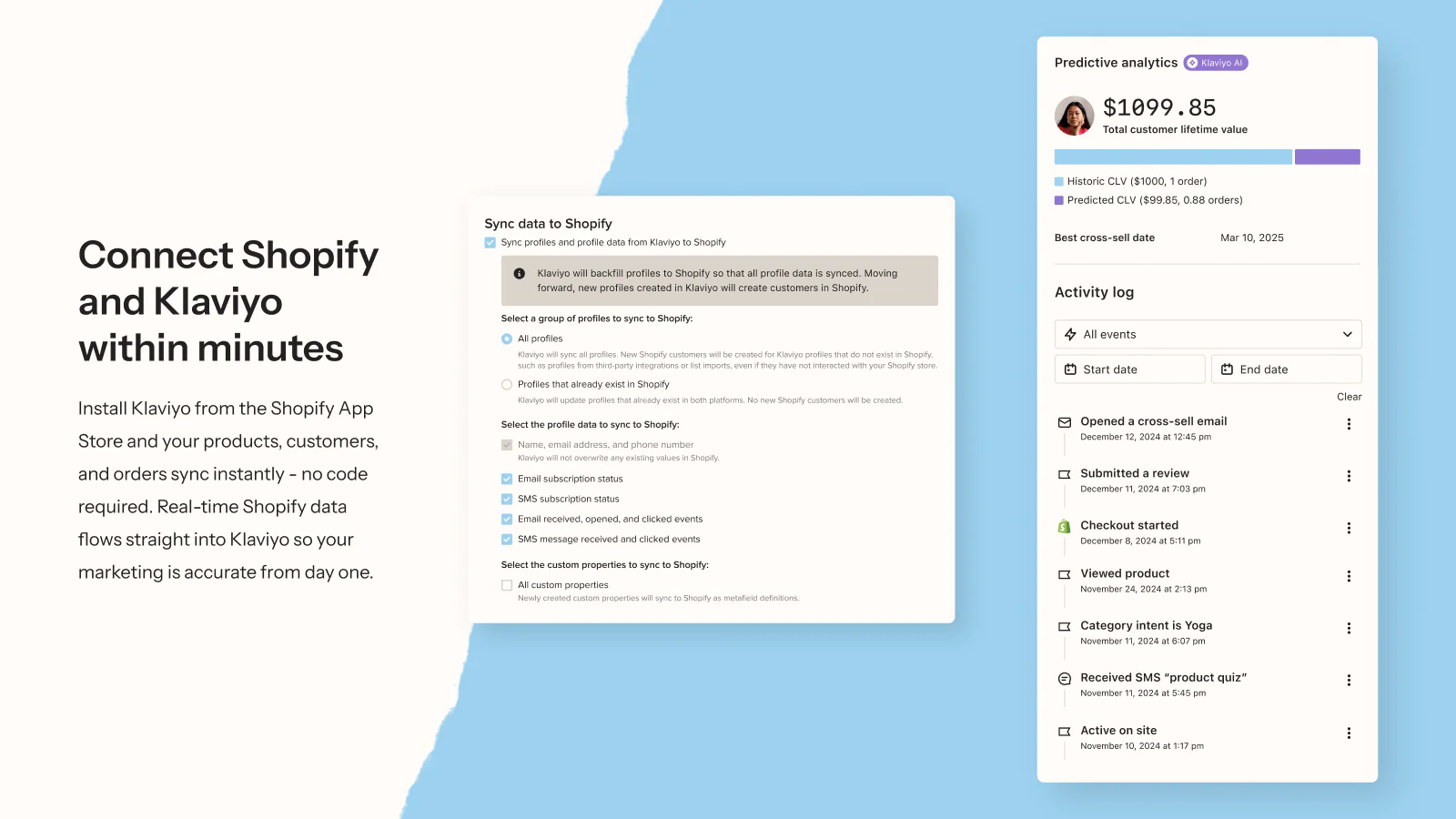
As one of the best Shopify email marketing apps, Klaviyo dominates the best Shopify email marketing apps list because it’s built specifically for ecommerce. The platform pulls your complete Shopify data, creating segments like “customers who bought twice but not in 60 days” or “high AOV purchasers who haven’t opened recent emails.”
Smart Send Time delivers emails when subscribers are most likely to buy, while predictive analytics identify churn risks before they leave. Real results back the hype, stores see 29% more email revenue within 90 days and 41% better cart recovery. One fashion store generated $47,000 extra in Q1 just from browse abandonment flows. The Facebook/Instagram integration syncs segments for profitable retargeting. Native SMS enables coordinated campaigns with 25% higher conversion. With 100+ automation templates and revenue-focused tracking, most stores recoup their investment within the first month.
Key Features:
- Advanced segmentation based on purchase behavior, browsing history, and engagement
- Pre-built flows for welcome series, abandoned cart, win-back, and post-purchase
- Predictive analytics for churn risk and purchase likelihood
- Smart product recommendations powered by AI
- SMS marketing is integrated natively
- Real-time revenue tracking and attribution
- A/B testing for subject lines, content, and send times
- Visual flow builder with conditional splits
Pros:
- Deepest Shopify integration available
- Excellent deliverability rates
- Powerful yet user-friendly
Cons:
- Gets expensive at scale
- Learning curve for advanced features
Pricing: Free up to 250 contacts, then from $20/month
Best For: Growing stores serious about email revenue
2. Omnisend
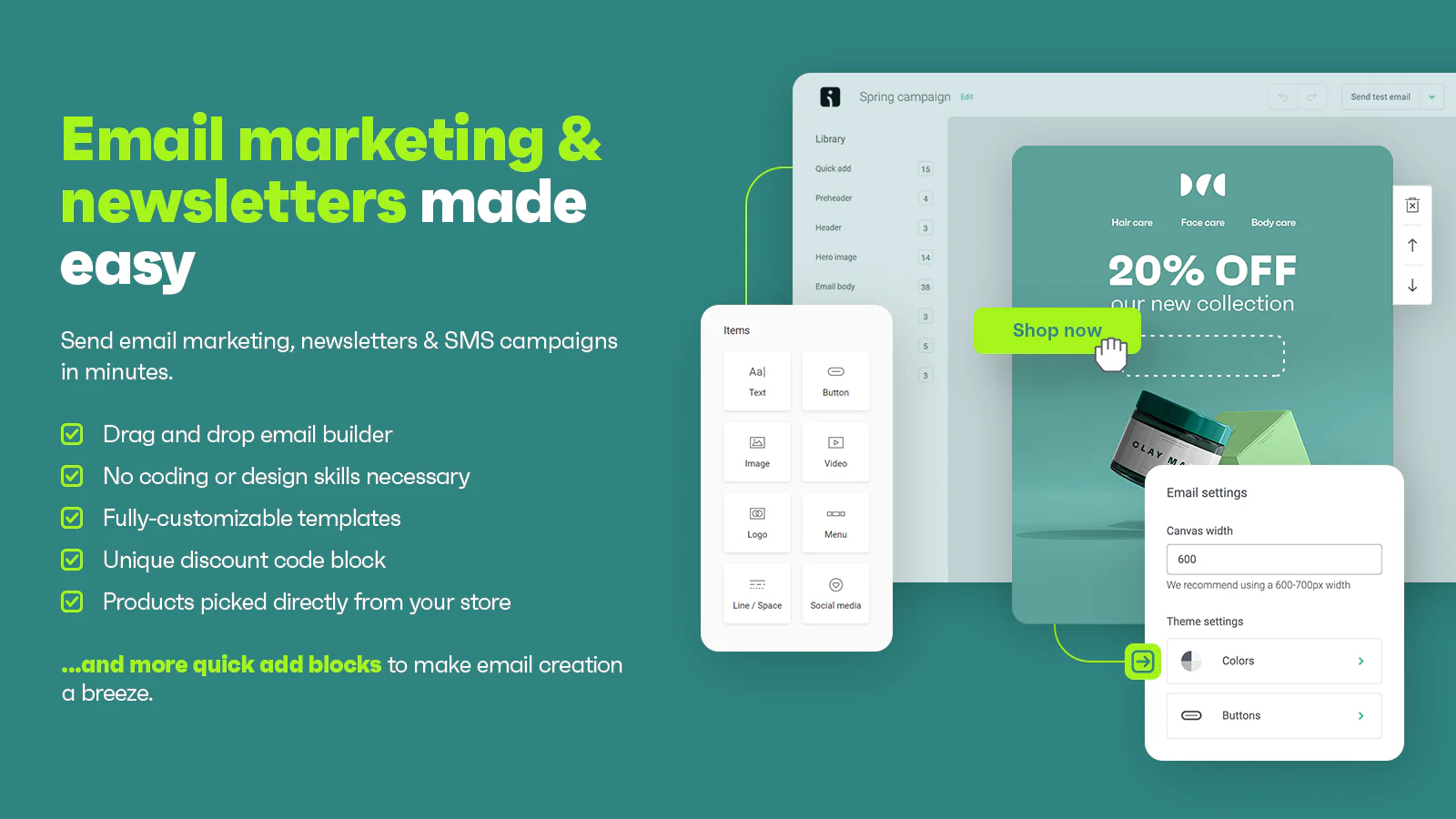
Omnisend excels among Shopify email marketing apps by unifying email, SMS, and push notifications in one platform. Customers receiving omnichannel messages spend 13% more than single-channel recipients, making this integration invaluable.
The pre-built workflows are exceptional, welcome series, cart recovery, and order follow-ups work instantly but remain customizable. Their Wheel of Fortune popups and gamification tools capture 30% more emails than standard forms. The automation builder’s visual mapping makes complex sequences simple, with triggers based on shopping behavior, not just email engagement.
Campaign Booster automatically resends to non-openers with different subject lines, improving reach by 17%. The product picker pulls live Shopify data, ensuring accurate pricing and inventory. With 24/7 live chat support even on basic plans and Facebook/Google retargeting built-in, Omnisend delivers enterprise features at small business prices. Most impressive: their free plan supports 250 contacts with 500 emails monthly, enough to test everything before committing.
Key Features:
- Email, SMS, and push notifications in one platform
- Pre-built automation for all ecommerce scenarios
- Wheel of Fortune and other gamified popups
- Product picker pulls directly from Shopify catalog
- Segmentation based on shopping behavior
- Campaign booster sends to non-openers automatically
- 24/7 live chat support even on lower tiers
- Google and Facebook retargeting integration
Pros:
- True omnichannel in one tool
- Generous free plan
- Excellent pre-built automations
Cons:
- SMS credits cost extra
- Limited design customization
Pricing: Free up to 250 contacts with 500 emails/month, then from $16/month
Best For: Stores wanting email + SMS in one platform
3. Shopify Email
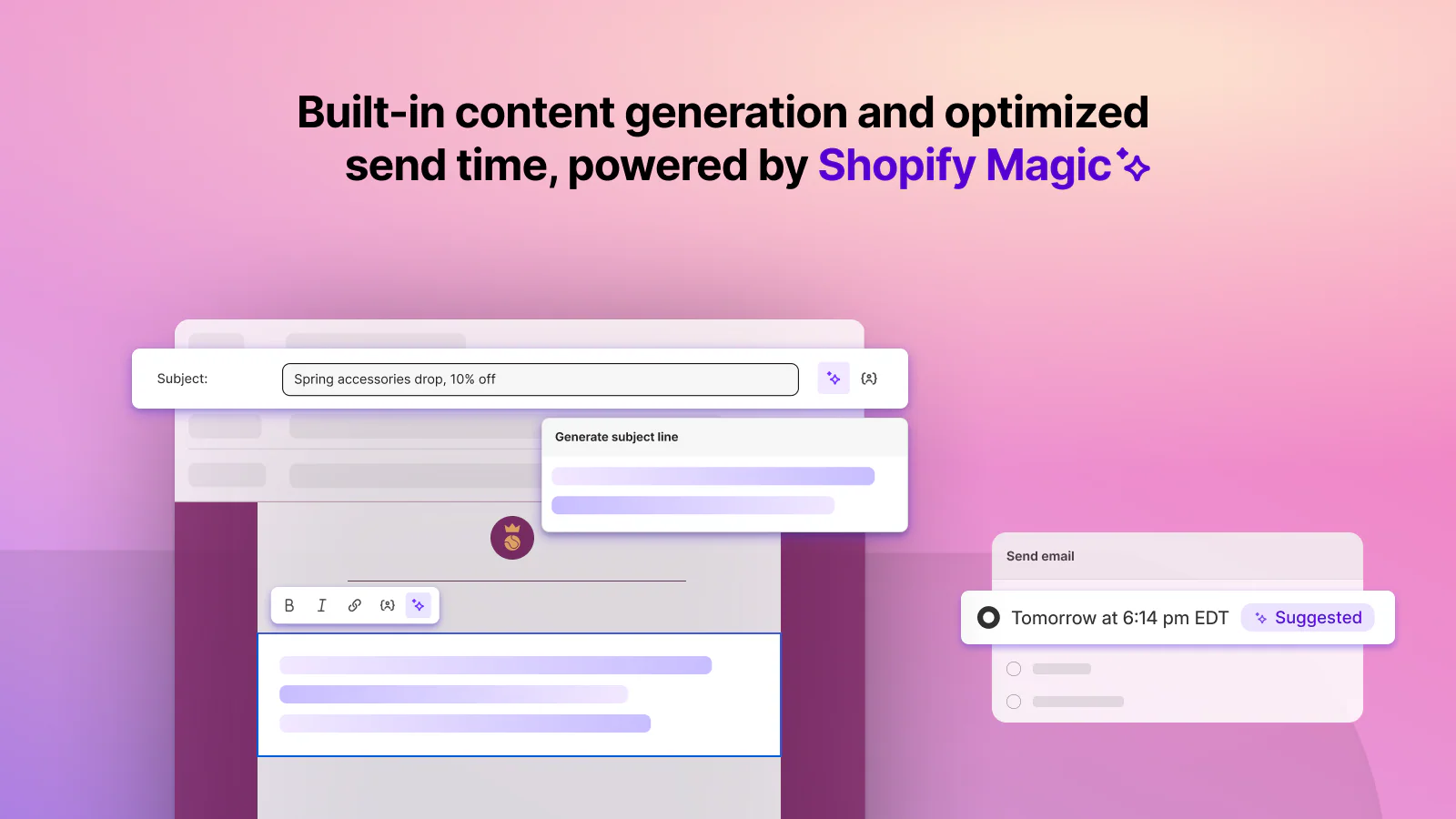
Shopify Email wins on simplicity among best free Shopify email marketing apps. Living directly in your admin means zero setup your branding, products, and customer data sync automatically without any configuration.
The templates pull live products with current prices and availability, eliminating manual updates. While limited to 10,000 monthly emails, the pay-as-you-go model ($1 per 1,000) keeps costs predictable. Basic abandoned cart recovery works out-of-the-box, recovering 10-15% of lost sales without any setup.
The real advantage is integration depth. Customer segments update in real-time, order data flows instantly, and everything works without connecting external apps. For stores under $10K monthly wanting simple newsletters and basic automation, it’s perfectly adequate. The 2,500 free monthly emails let you test email marketing risk-free. However, growing stores quickly hit limitations—no A/B testing, minimal automation, basic analytics—making it a stepping stone rather than a destination.
Key Features:
- Native Shopify integration with zero setup
- Automatic brand styling from your store
- Product picker with live inventory/pricing
- Basic abandoned cart recovery
- Simple segmentation by customer data
- Pay-as-you-go pricing model
- Templates optimized for mobile
- Basic tracking and analytics
Pros:
- Completely free for 2,500 emails/month
- Dead simple to use
- No app installation needed
Cons:
- 10,000 monthly email limit
- Very basic automation
- No A/B testing
Pricing: Free for 2,500 emails/month, then $1 per 1,000 emails
Best For: New stores wanting simple email marketing
4. Privy

Privy stands out in the best Shopify email marketing apps category by cleverly combining professional popup tools with email marketing in one platform. Their popup builder rivals dedicated apps with exit-intent, spin-to-win wheels, and countdown timers that capture 3x more emails than basic forms. T
he seamless flow from popup to email campaign eliminates integration hassles. Captured emails immediately enter welcome series, while cart abandoners trigger recovery sequences. Their “text-to-join” feature builds SMS lists simultaneously one popup captures both channels. Display rules based on behavior, device, and geography ensure popups appear at optimal moments without annoying visitors.
While email features aren’t as robust as Klaviyo, they handle essentials well, automated campaigns, basic segmentation, cart recovery. The free plan includes unlimited popups and 100 email sends, perfect for testing. Stores focused on aggressive list building see 40% faster growth using Privy’s integrated approach versus separate tools.
Key Features:
- Full popup builder with 100+ templates
- Exit-intent, cart abandonment, and welcome popups
- Spin-to-win wheels and gamification
- Text-to-join for SMS collection
- Basic email automation and campaigns
- Cart abandonment emails
- Cross-sell and upsell campaigns
- A/B testing for popups and emails
Pros:
- Best-in-class popup builder
- Captures email and SMS together
- Great for list building
Cons:
- Email features less robust than dedicated tools
- Can get pricey with multiple features
Pricing: Free plan available, paid from $12/month
Best For: Stores focused on aggressive list building
5. Mailchimp

Despite a rocky Shopify relationship, Mailchimp’s remains one of the most popular Shopify email marketing apps due to its intuitive interface and brand recognition. Non-technical users can create professional campaigns within minutes using their drag-and-drop builder and extensive template library.
Recent ecommerce additions show they’re taking Shopify seriously, product recommendations, purchase-based automation, and abandoned cart recovery. The Customer Journey Builder visualizes automation flows clearly, making complex sequences understandable. Their Content Studio manages all creative assets in one place, while the mobile app enables full campaign management on-the-go.
However, the Shopify integration remains weaker than purpose-built alternatives after their marketplace removal and return. Pricing escalates quickly, what starts at $13 becomes $100+ as you grow. Still, for absolute beginners prioritizing ease over advanced features, Mailchimp’s familiarity and extensive learning resources make email marketing approachable. The 500-contact free plan provides enough room to learn basics before committing.
Key Features:
- Drag-and-drop email builder
- Customer journey builder for automation
- Product recommendations
- Social media ad integration
- Content studio for asset management
- Basic abandoned cart recovery
- Audience dashboard with insights
- Mobile app for on-the-go management
Pros:
- Most intuitive interface
- Great for beginners
- Strong brand recognition
Cons:
- Expensive as you scale
- Weaker Shopify integration
- Limited ecommerce features
Pricing: Free up to 500 contacts, then from $13/month
Best For: Absolute beginners prioritizing ease over features
6. Seguno
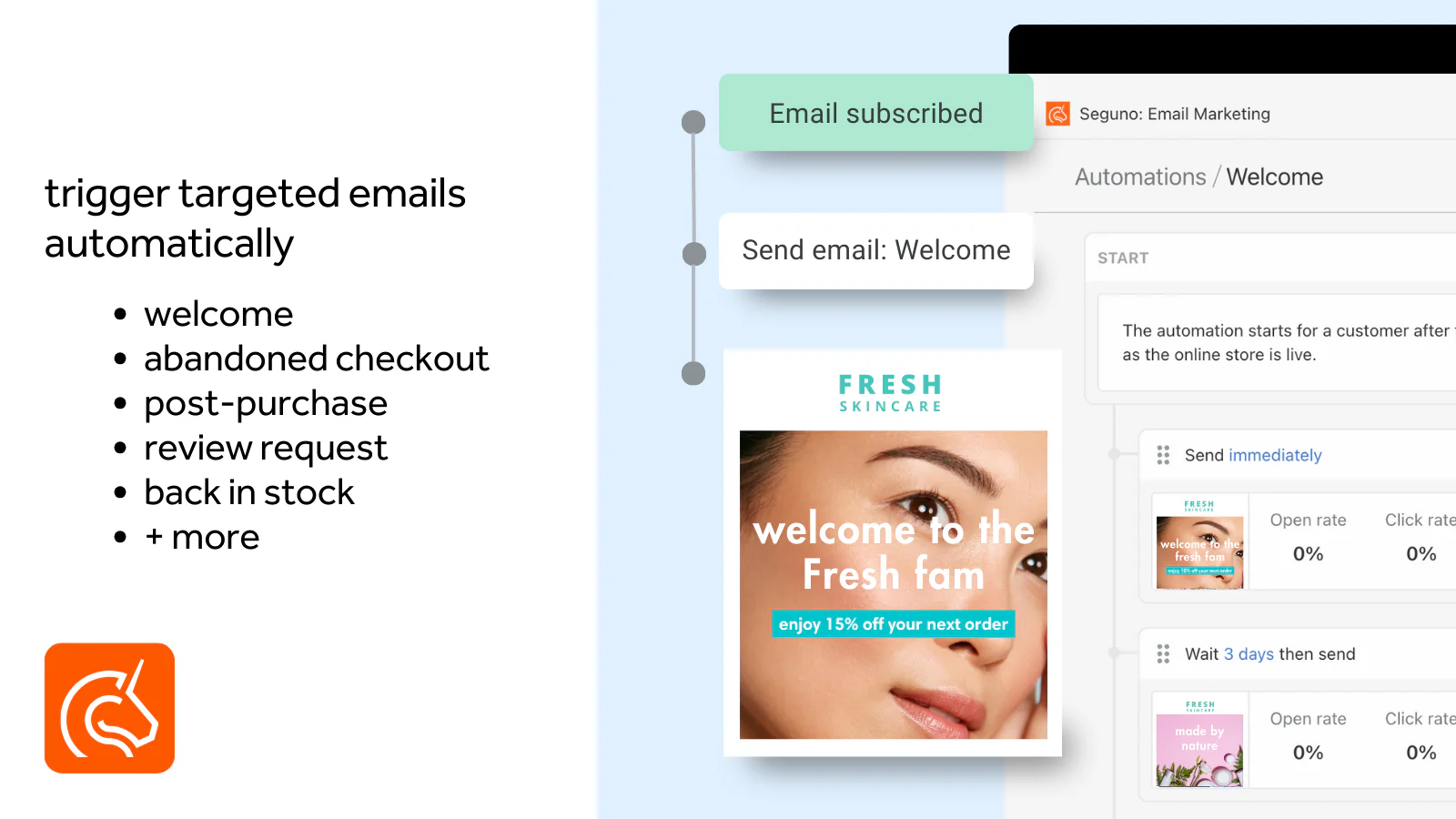
Seguno quietly delivers exceptional value among best Shopify email marketing apps through transparent pricing and unlimited sends at every tier. Built exclusively for Shopify, it includes features typically costing 3x more elsewhere. Every tier includes unlimited email sends, no overage fees or surprise charges.
The pre-built templates cover essential automations: welcome series, cart recovery, win-backs, order follow-ups. Product review integration pulls ratings directly into emails, boosting click rates 23%. Dynamic discount codes create unique offers per subscriber, reducing coupon abuse.
While the interface feels dated and analytics are basic, core functionality works reliably. The $10/month starting price for 250 contacts with unlimited sends beats every competitor. Seguno proves you don’t need premium prices for professional email marketing. For budget-conscious stores wanting dependable automation without complexity, it’s an underrated gem that consistently over-delivers.
Key Features:
- Unlimited email sends at every tier
- Pre-built automation templates
- Product review integration
- Dynamic discount codes
- Newsletter signup forms
- Basic segmentation tools
- Abandoned cart recovery
- Order follow-up sequences
Pros:
- Transparent pricing
- Unlimited sends
- Built for Shopify
Cons:
- Dated interface
- Limited advanced features
- Basic analytics
Pricing: From $10/month for up to 250 contacts
Best For: Budget-focused stores wanting unlimited sends
7. Sendlane
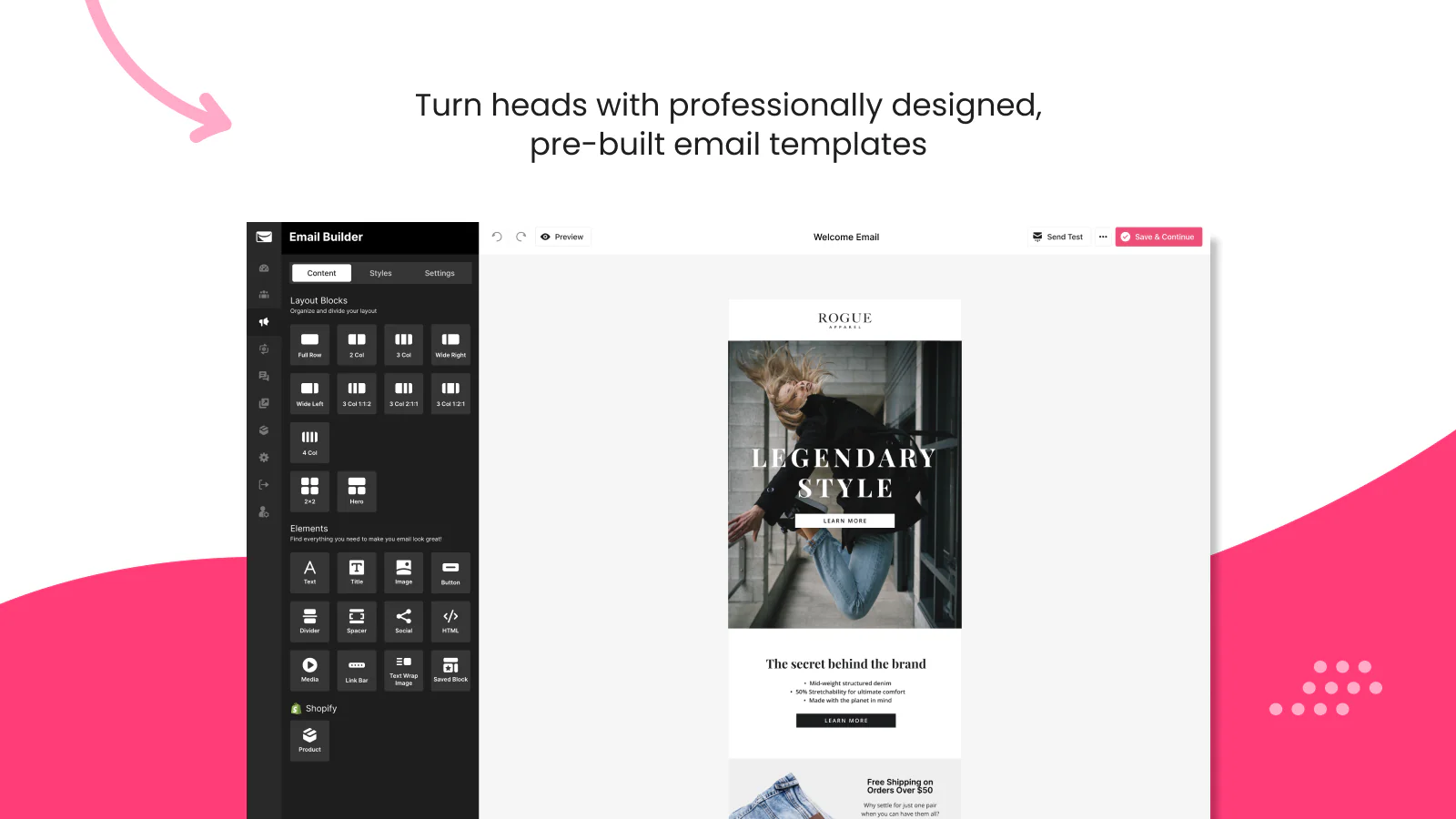
For established stores seeking premium features, Sendlane ranks among the top Shopify email marketing apps with sophisticated unified email and SMS capabilities. Their real-time behavioral tracking triggers emails based on site actions, not just email engagement, capturing intent when it’s highest.
The platform goes beyond basic A/B testing with multivariate experiments testing multiple elements simultaneously. Deep-data profiles show complete customer journeys, enabling hyper-personalization. Their SMS integration is truly native, not bolted on, coordinated campaigns see 32% higher revenue than single-channel.
White glove onboarding includes migration assistance and strategic consultation. The platform syncs audiences with Facebook and Google for coordinated retargeting. At $83/month minimum, it’s pricey but includes features others charge extra for unlimited emails, advanced automation, premium support. Stores doing $50K+ monthly find the sophisticated automation and unified messaging justify the investment through improved customer lifetime value.
Key Features:
- Unified email and SMS platform
- Real-time behavioral tracking
- Multivariate testing beyond A/B
- Deep-data customer profiles
- Advanced automation with branching logic
- Pop-ups and forms builder
- Audience sync with Facebook/Google
- White glove onboarding support
Pros:
- Premium features and support
- True unified messaging
- Excellent deliverability
Cons:
- Higher price point
- Overkill for small stores
Pricing: From $83/month
Best For: $50K+ monthly stores wanting premium features
8. ActiveCampaign
ActiveCampaign brings enterprise-level automation to the best Shopify email marketing apps list with CRM features that transform email into a complete sales system. Their visual builder creates workflows impossible elsewhere, lead scoring, deal tracking, conditional content based on any data point. The CRM integration transforms email into a complete sales system.
Site tracking shows which products customers view, triggering targeted follow-ups. Machine learning optimizes send times individually, improving open rates 21%. Split testing goes beyond subject lines test entire automation paths to find optimal journeys.
Attribution reporting shows true multi-touch revenue impact. The platform handles B2B and B2C differently, with features like deal pipelines for wholesale while maintaining traditional ecommerce tools. Starting at $29/month, the learning curve is steep but capabilities are unmatched. For stores wanting sophisticated automation beyond basic email, ActiveCampaign delivers CRM-level power in an email platform.
Key Features:
- Visual automation builder with 500+ recipes
- CRM with deal tracking
- Lead scoring and sales automation
- Site tracking and event tracking
- Conditional content and personalization
- Split testing automation paths
- Attribution reporting
- Machine learning for send time optimization
Pros:
- Most powerful automation available
- Built-in CRM
- Incredible flexibility
Cons:
- Steep learning curve
- Can be overwhelming
Pricing: From $29/month
Best For: Stores wanting CRM + email combined
9. GetResponse
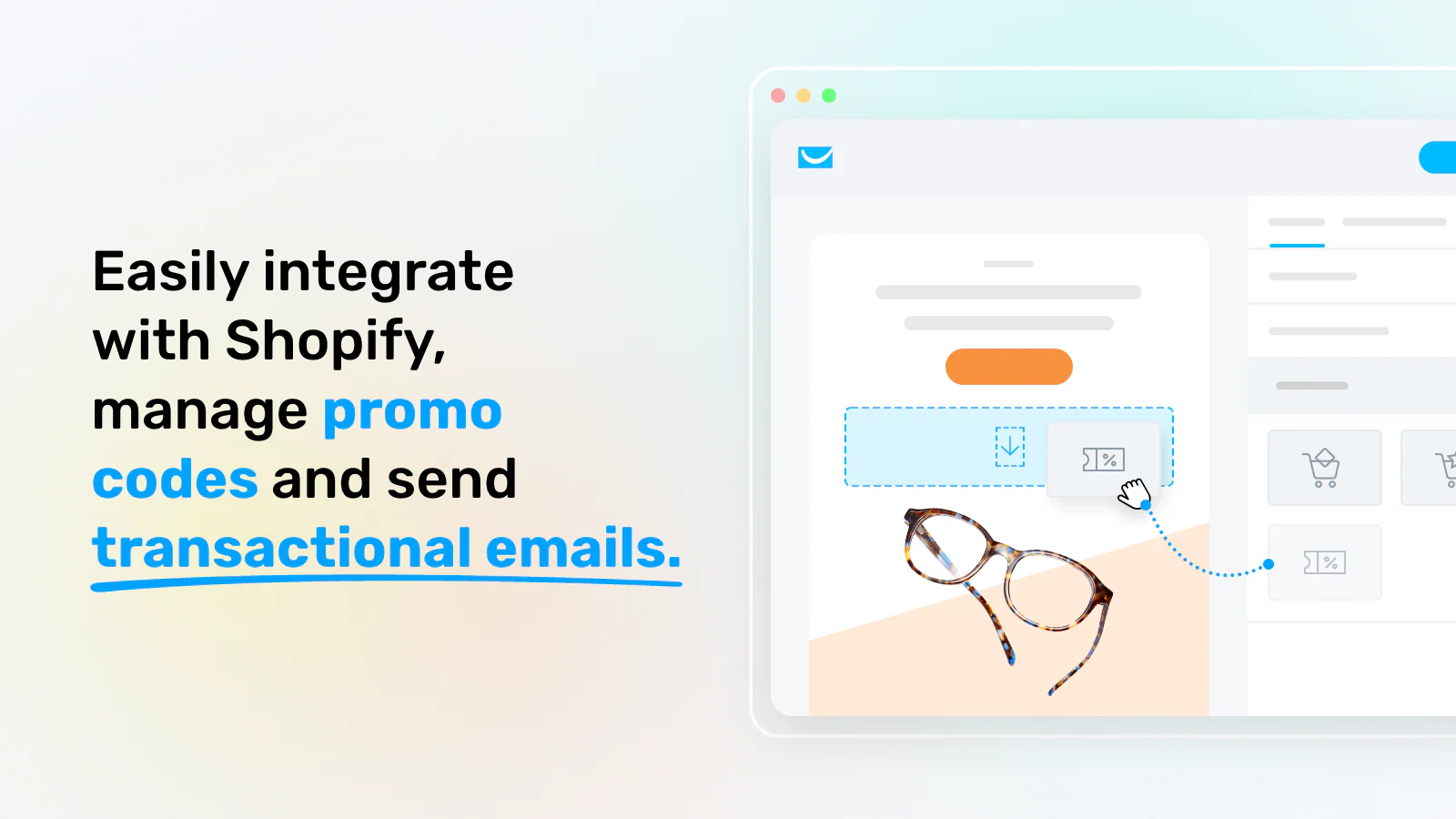
GetResponse earns its place among Shopify email marketing apps by bundling email marketing with landing pages, webinars, and sales funnels in one platform.
The email features remain solid with good automation and templates. But extras add real value: landing page builder creates high-converting pages without coding, webinar platform hosts live selling events, funnel builder maps complete customer journeys. Their Facebook ads creator manages social campaigns alongside email for coordinated messaging.
Conversion funnel tracking shows where customers drop off across all touchpoints. At $15/month, it’s cheaper than buying individual tools. The interface feels cluttered with so many features, but for stores running educational content, virtual events, or needing landing pages, having everything integrated saves juggling multiple platforms. It’s the Swiss Army knife of email marketing.
Key Features:
- Email marketing with automation
- Landing page builder
- Webinar hosting platform
- Sales funnel creator
- E-commerce integrations
- Facebook ads creator
- Web push notifications
- Conversion funnel tracking
Pros:
- Multiple tools in one
- Good value for features
- Solid email capabilities
Cons:
- Jack-of-all-trades syndrome
- Interface can feel cluttered
Pricing: From $15/month
Best For: Stores needing marketing tools beyond email
10. Constant Contact
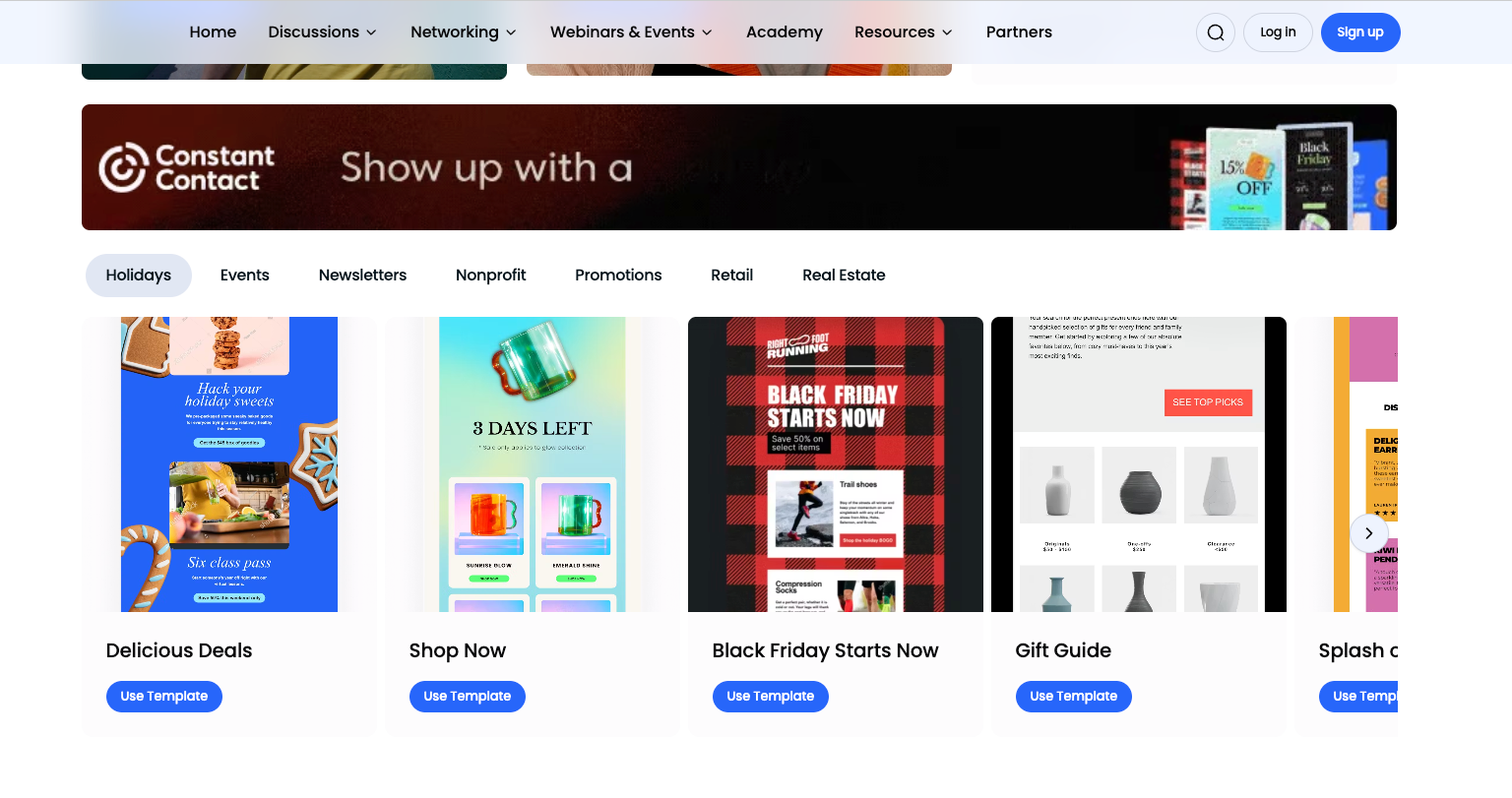
Constant Contact wins a spot on our best Shopify email marketing apps list through exceptional customer support with phone, chat, and extensive training resources. Non-technical merchants find this hand-holding invaluable when starting email marketing. Their platform covers basics reliably, email campaigns, basic automation, abandoned cart recovery. The drag-and-drop editor creates professional emails without design skills.
Event management tools handle workshop registrations and webinar signups. Social media scheduling coordinates posts with email campaigns. Even includes a logo maker and stock image library. While features lag behind advanced platforms, execution is flawless. Their support team actually answers quickly with helpful solutions, not scripts. Extensive tutorials, webinars, and guides teach email marketing fundamentals. At $12/month with 60-day free trial, it’s affordable for beginners.
For merchants valuing guidance over cutting-edge features, Constant Contact provides confidence through exceptional support.on customer service with phone support, live chat, and extensive training resources. For non-technical store owners who value hand-holding over cutting-edge features, this level of support makes all the difference.
Key Features:
- Phone and chat support
- Email marketing campaigns
- Marketing automation basics
- Event management tools
- Social media scheduling
- Logo maker and design tools
- Abandoned cart recovery
- List segmentation tools
Pros:
- Exceptional customer support
- Very beginner-friendly
- Good training resources
Cons:
- Limited advanced features
- Basic automation only
Pricing: From $12/month
Best For: Non-technical users wanting excellent support
11. Drip
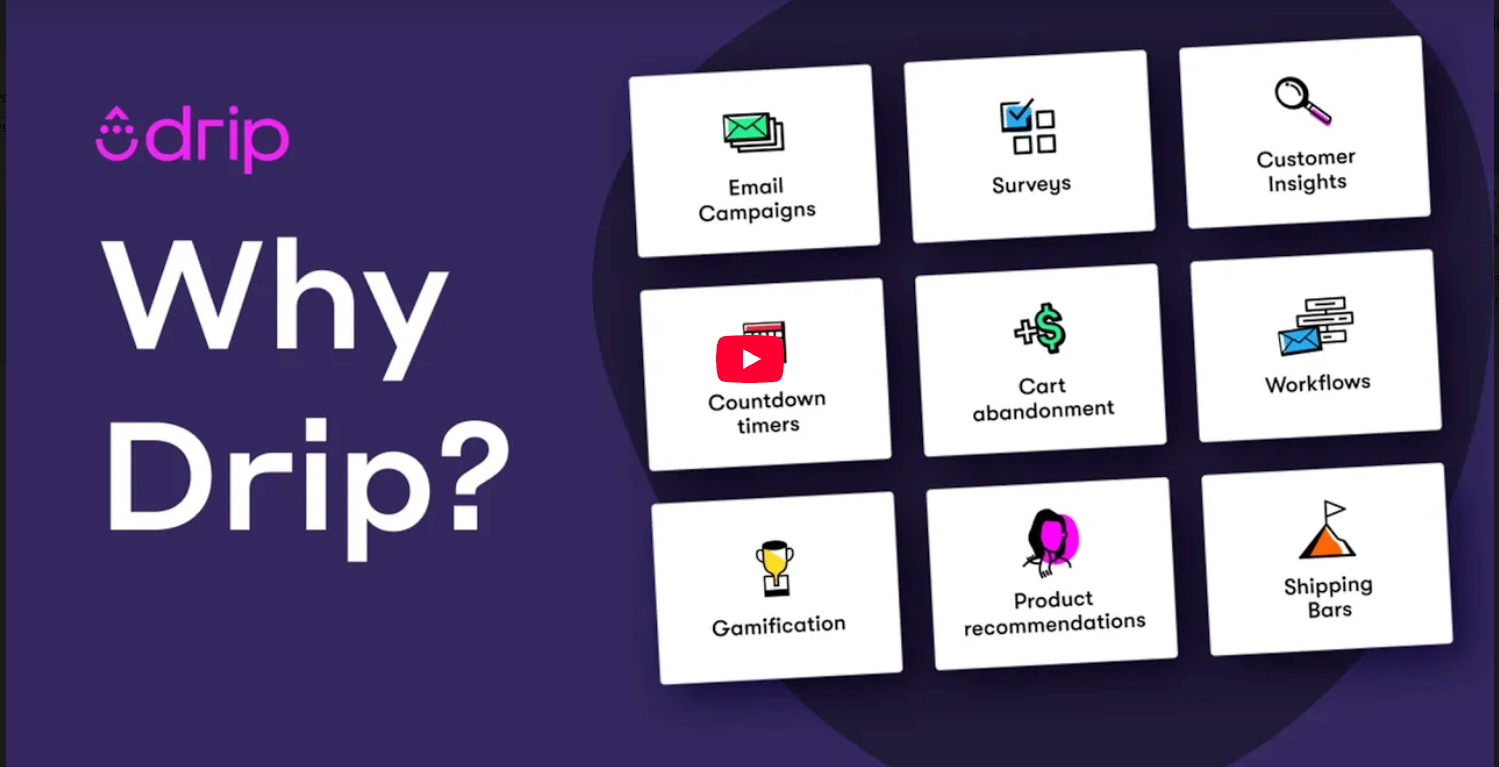
Drip distinguishes itself among top Shopify email marketing apps by merging CRM capabilities with email marketing for incredibly detailed customer insights. Every interaction builds comprehensive histories products viewed, emails clicked, purchases made, support tickets enabling laser-focused targeting.
Their visual workflow builder uses “decision trees” adapting to customer behavior in real-time. Revenue attribution tracking shows exactly which campaigns drive profits, not just engagement. The platform syncs with Facebook Custom Audiences for retargeting based on email behavior. Multi-channel campaigns coordinate email with SMS and social messaging.
Cart abandonment workflows go beyond basic recovery dynamic content changes based on cart value, customer history, and browsing behavior. Win-back automation identifies at-risk customers before they churn. At $39/month, it’s pricier but the customer insights justify costs. For data-driven stores wanting to understand customers deeply, Drip transforms email from broadcast tool to relationship builder.
Key Features:
- Visual workflow builder
- Deep customer data profiles
- Revenue attribution tracking
- Facebook custom audiences sync
- Multi-channel campaigns
- Decision trees for automation
- Cart abandonment workflows
- Win-back automation
Pros:
- Powerful customer insights
- Built for ecommerce
- Great segmentation
Cons:
- Basic email design tools
- Higher learning curve
Pricing: From $39/month
Best For: Data-driven stores wanting deep insights
12. ConvertKit
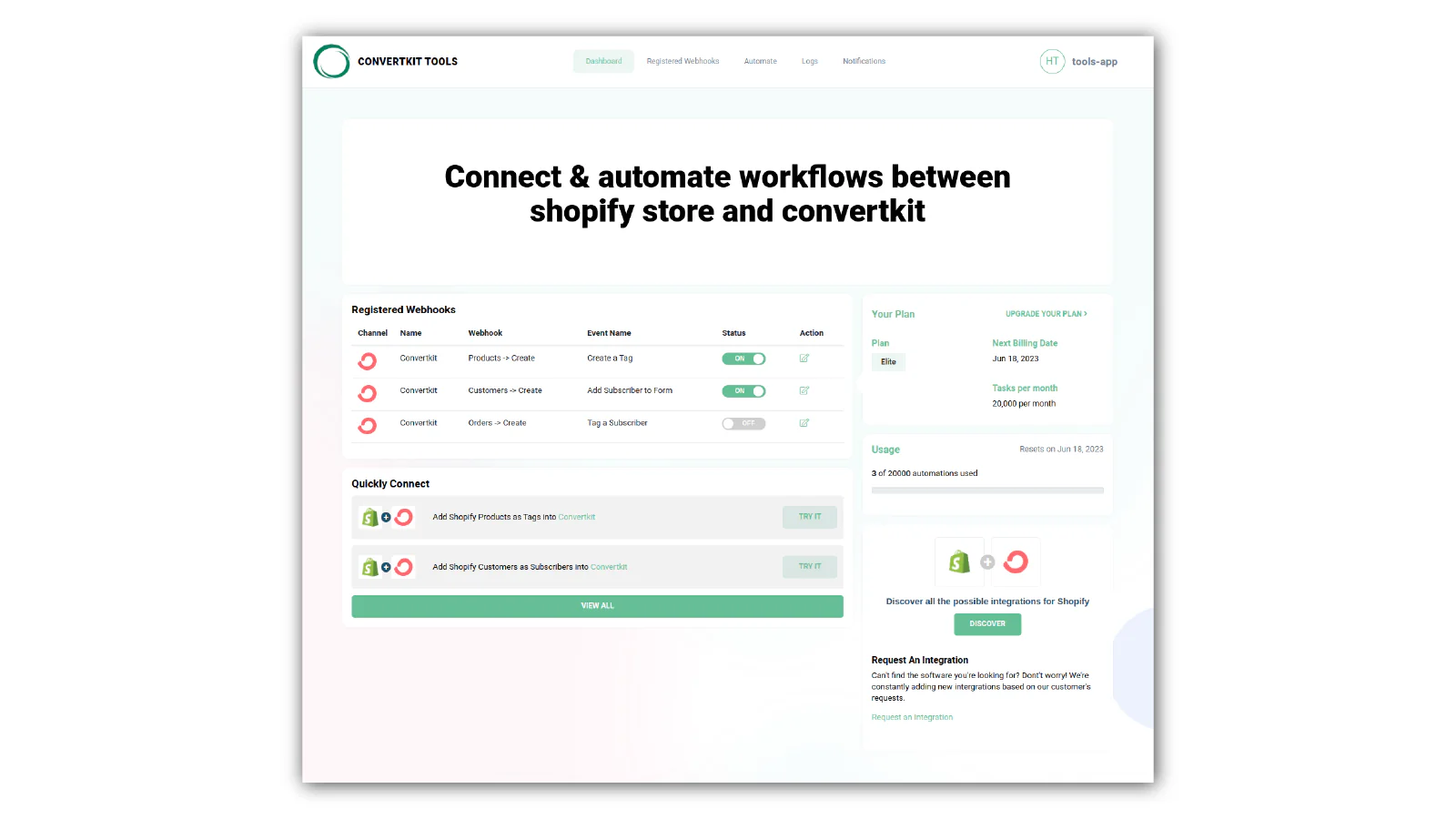
While unconventional for ecommerce, ConvertKit deserves inclusion in best Shopify email marketing apps for stores building brands through content and storytelling. Built for creators, it’s perfect for stores selling through education, community, or storytelling. The tag-based system organizes subscribers by interests, not just purchases.
Visual automation handles course delivery, content upgrades, and educational sequences beautifully. Landing pages and forms convert 30% better than average through simplicity. Digital product delivery automates course or download access after purchase.
Their Creator Network enables cross-promotion with other brands. RSS-to-email automatically shares new blog content. Custom fields enable deep personalization beyond basic merge tags. While ecommerce features are limited, basic purchase tracking, simple product emails, the content tools are exceptional. At $9/month after 300 free contacts, it’s affordable for brands building audiences. For stores where content drives sales, ConvertKit’s creator focus delivers better results than traditional ecommerce platforms.
Key Features:
- Visual automation builder
- Tag-based subscriber organization
- Landing pages and forms
- Digital product delivery
- Creator network for cross-promotion
- Subscriber scoring
- Custom fields for personalization
- RSS to email for blogs
Pros:
- Perfect for content-heavy brands
- Clean, simple interface
- Great for courses/digital products
Cons:
- Limited ecommerce features
- Basic analytics
Pricing: Free up to 300 subscribers, then from $9/month
Best For: Brand-focused stores with content strategies
13. Brevo

Brevo offers the most generous plan among free Shopify email marketing apps with unlimited contacts and 300 daily emails forever at no cost. This isn’t a trial; it’s a permanent free plan supporting real businesses. Beyond email, the platform includes SMS marketing, chat widgets, and even Facebook ads management. Marketing automation handles welcome series, abandoned carts, and win-backs.
Transactional emails ensure order confirmations are delivered reliably. The CRM tracks customer interactions across channels. At 300 emails daily, you could email 2,000 contacts weekly or 300 engaged subscribers daily sufficient for many small stores.
The interface takes adjustment and daily limits require planning, but features rival paid alternatives. When ready to scale, paid plans start at $25/month with unlimited emails. For bootstrapped stores wanting professional tools without monthly fees, Brevo delivers exceptional value that grows with your business.
Key Features:
- Unlimited contacts on free plan
- 300 emails daily forever free
- SMS marketing included
- Marketing automation
- Transactional emails
- Facebook ads integration
- Live chat widget
- CRM functionality
Pros:
- Best free plan available
- Multiple channels included
- No contact limits
Cons:
- Daily sending limits
- Interface takes adjustment
Pricing: Free forever (300 emails/day), paid from $25/month
Best For: Bootstrapped stores wanting professional features free
14. MailerLite
MailerLite provides the best value among best free Shopify email marketing apps with professional features at budget prices and a generous 1,000-contact free tier. Professional features with budget pricing among best free Shopify email marketing apps. Their free plan supports 1,000 contacts with 12,000 monthly emails, generous enough for established stores.
The drag-and-drop editor creates beautiful, responsive emails without code. Automation workflows handle complex sequences visually. Included landing pages eliminate need for separate tools. Pop-ups and embedded forms grow lists effectively. Their iPad app enables mobile campaign management. Recent additions include paid newsletter subscriptions and website builder, unusual for email platforms.
Templates are modern and conversion-focused. Deliverability consistently ranks among the best. At $9/month after free tier, it’s the cheapest path to professional email marketing. While Shopify-specific features are basic, general email tools excel. For cost-conscious stores wanting room to grow without breaking budgets, MailerLite provides the best feature-to-price ratio available.
Key Features:
- Drag-and-drop editor
- Automation workflows
- Landing pages included
- Pop-ups and forms
- Website builder
- iPad app for mobile editing
- Survey builder
- Newsletter subscriptions
Pros:
- Best price-to-feature ratio
- Beautiful templates
- Generous free plan
Cons:
- Limited Shopify-specific features
- Basic ecommerce tools
Pricing: Free up to 1,000 contacts, then from $9/month
Best For: Cost-conscious stores wanting professional features
15. Automizely
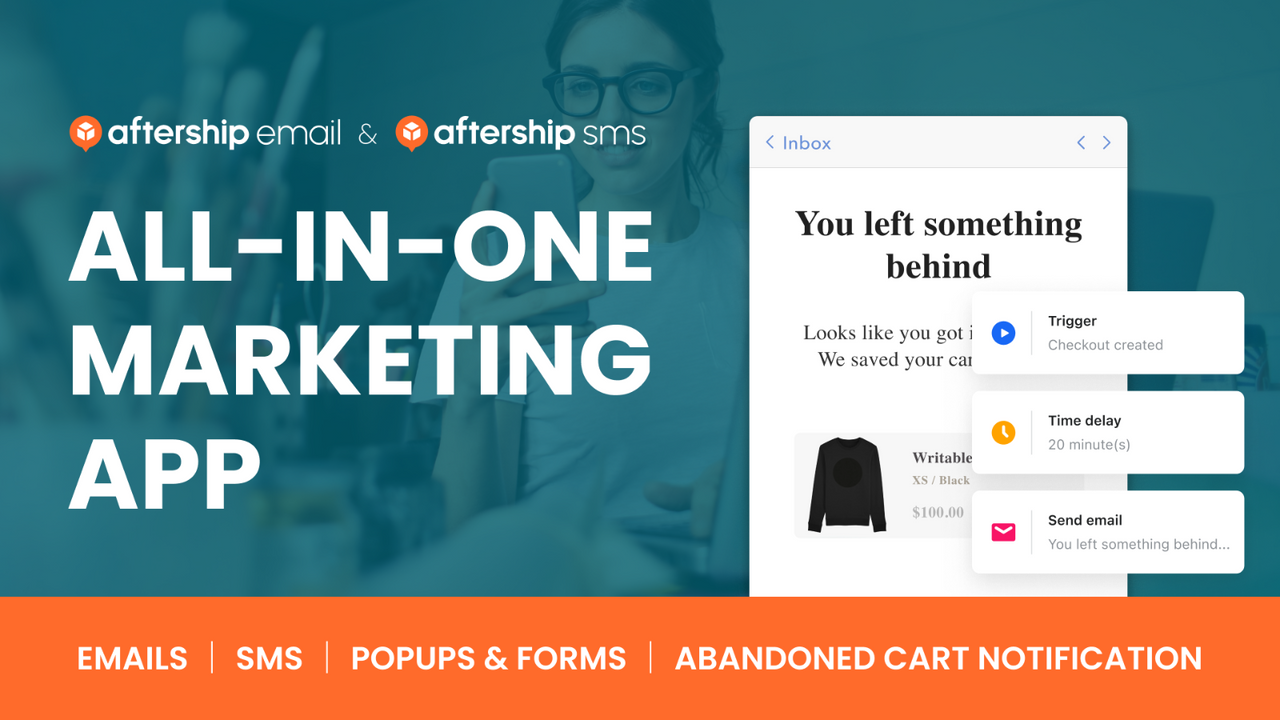
Automizely takes a unique approach among free Shopify email marketing apps by offering core features completely free forever, monetizing only through optional add-ons. This isn’t a trial; it’s a sustainable free model. Unlimited contacts and basic campaigns remain free indefinitely.
Welcome emails, abandoned cart recovery, and order follow-ups work without payment. Newsletter templates cover common needs. Basic segmentation targets engaged subscribers. The platform is simple but functional perfect for stores just needing email without complexity.
Optional add-ons ($4.99/month each) include SMS marketing, product reviews, loyalty programs. This modular approach means you only pay for what you use. While features are basic and customization limited, it works reliably. For stores wanting zero-cost email marketing indefinitely, Automizely delivers exactly what’s promised—functional email marketing without the bill.
Key Features:
- Unlimited contacts free
- Basic email campaigns
- Welcome emails
- Abandoned cart recovery
- Order follow-up emails
- Newsletter templates
- Basic segmentation
- Optional paid add-ons (SMS, reviews)
Pros:
- Actually free forever
- No contact limits
- Simple and functional
Cons:
- Very basic features
- Limited automation
- Minimal customization
Pricing: Free forever core features, paid add-ons from $4.99/month
Best For: Stores wanting zero-cost email marketing indefinitely
Common Mistakes When Choosing Shopify Email Marketing Apps
1. Choosing Based on Price Alone The cheapest option often lacks crucial automation or has poor deliverability. A $10/month app with 70% inbox placement costs more than a $30/month app reaching 95% of inboxes. Calculate true cost including lost sales from missing features.
2. Ignoring Shopify Integration Depth Generic email tools might have great features but weak Shopify connections. Without automatic syncing of purchase history, browsing behavior, and customer segments, you’ll waste hours on manual work and miss targeting opportunities.
3. Overlooking Mobile Optimization With 65% of emails opened on mobile, choosing apps with poor mobile templates kills conversions. Test how emails look on phones during trials—desktop-beautiful templates that break on mobile aren’t worth it.
4. Not Testing During Free Trials Installing an app and sending one test email isn’t enough. Run actual campaigns, build automations, import your real list, and measure deliverability during trials. You’ll discover deal-breakers before committing.
5. Falling for Feature Overload More features don’t mean better results. An app with 100 features you’ll never use is worse than one with 20 features you’ll use daily. Match complexity to your team’s capabilities and actual needs.
6. Skipping Deliverability Research The best automation means nothing in spam folders. Check sender reputation, authentication support (SPF, DKIM), and actual inbox placement rates. Ask current users about their deliverability experiences.
7. Underestimating Learning Curves Complex platforms like ActiveCampaign offer power but require significant learning time. If you’re a solo entrepreneur, choosing simpler Shopify email marketing apps that you’ll actually use beats advanced tools that overwhelm you.
8. Not Planning for Growth Your 500-contact solution might charge 10x more at 5,000 contacts or lack features you’ll need later. Review pricing tiers and feature availability at your projected list size in 12 months, not just today.
9. Forgetting About Support Quality When campaigns break or integrations fail, support response time matters. Free apps often mean no support or 72-hour response times. Factor in support availability, especially if you’re non-technical.
10. Missing Hidden Costs Watch for overage fees, premium template charges, extra costs for additional users, SMS credits sold separately, and migration fees. Some Shopify email marketing apps advertise low base prices but nickel-and-dime you into expensive bills.
Pro Tip: Avoid these mistakes by listing your must-have features first, testing your top 3 choices thoroughly, and calculating total cost at your expected list size. The best Shopify email marketing apps aren’t necessarily the most popular, they’re the ones matching your specific needs and growth trajectory.
Essential Features in the Best Shopify Email Marketing Apps
The best Shopify email marketing apps landscape has evolved significantly. While basic email blasts worked in 2020, today’s consumers expect personalized, timely, and relevant communication. Here are the must-have features that separate professional email marketing from amateur hour.
- Prebuilt ecommerce automations
Nobody has time to build complex workflows from scratch. Look for apps with ready-to-use templates for common scenarios like browse abandonment, price drops, and restock alerts. These should work immediately but remain customizable for your brand voice.
- Abandoned cart workflows
This is table stakes, recovering 15-30% of abandoned carts should be automatic. Modern apps go beyond single reminders, sending multi-step sequences with escalating incentives and smart timing based on cart value.
- Welcome & post-purchase sequences
New subscribers are 8x more likely to engage, capture that momentum with multi-email welcome series. Post-purchase flows that request reviews, suggest complementary products, and encourage repeat purchases turn one-time buyers into loyal customers.
- Segmentation & tagging
Batch emails to everyone are dead. You need dynamic segments that update automatically based on purchase history, engagement, and behavior. VIP customers should get different messages than bargain hunters.
- SMS integration
Email and SMS work better together. Unified platforms that coordinate both channels see 25% higher conversion rates. SMS handles urgent messages while email provides detail, using both strategically multiplies results.
- Nice templates
Your emails represent your brand. Mobile-responsive templates that actually look good and convert are non-negotiable. Drag-and-drop editors should make customization easy without requiring design skills.
- Popups for list building
Growing your list requires capturing visitors before they leave. Built-in popup tools eliminate the need for separate apps while ensuring captured emails flow directly into your campaigns.
- Reliable deliverability
The best email means nothing in spam folders. Look for platforms maintaining 95%+ inbox placement through proper authentication, dedicated IPs, and reputation monitoring.
- Revenue tracking
You can’t improve what you don’t measure. Direct integration with Shopify analytics apps shows exactly which campaigns drive sales, not just opens and clicks.
- AI-assisted content
Writing subject lines, product descriptions, and email copy takes hours. AI tools that generate on-brand content while maintaining your voice save time while improving performance through data-driven optimization.
The right combination of these features transforms email from a time-consuming chore into an automated revenue engine. Focus on tools that excel at the features most relevant to your business model rather than chasing every shiny new capability.
How to Choose the Right Email App for Your Store
Your perfect Shopify email marketing apps match depends on three factors: where you are now, where you’re going, and how you want to get there.
For startups (0-500 contacts): Start free with MailerLite, Brevo, or Shopify Email. Focus on building your list and learning basics. Upgrade when you hit contact limits or need automation.
For growing stores (500-5,000 contacts): Invest in Klaviyo or Omnisend. The automation and segmentation capabilities will multiply your revenue. The $20-50 monthly cost pays for itself quickly through better targeting.
For established stores (5,000+ contacts): Consider premium options like Sendlane or ActiveCampaign. Advanced features like predictive analytics and multi-channel orchestration become valuable at scale.
Your industry matters too. Fashion brands need visual editors and Instagram integration. B2B stores need CRM features and lead scoring. Subscription businesses need sophisticated retention automation. Match the tool to your specific needs, not general “best” lists.
Final Thoughts
Email marketing remains the highest ROI channel for Shopify stores, but only with the right tools. While dozens of options exist, the best Shopify email marketing apps for most stores are Klaviyo (for advanced features), Omnisend (for omnichannel), or MailerLite (for budget).
Start with free Shopify email marketing apps to learn the basics, then upgrade when email revenue justifies the investment. Focus on building your list consistently even 10 new subscribers daily becomes 3,650 annually. Set up basic automation first (welcome series, abandoned carts), then expand as you learn what resonates with your audience.
Remember, your email list is an asset you own completely, unlike social media followers or paid traffic. The best Shopify email marketing apps help you maximize this asset. Ready to transform your email marketing? Start with one of these recommended top Shopify email marketing apps and track your performance with Reportgenix to ensure every campaign drives profitable growth.
FAQs
What are the best Shopify email marketing apps in 2026?
The best Shopify email marketing apps include Klaviyo for advanced features, Omnisend for omnichannel marketing, Brevo for free options, and MailerLite for budget-conscious stores. Your choice among top Shopify email marketing apps depends on store size, budget, and feature needs.
What email marketing services work with Shopify?
Most major email marketing platforms integrate with Shopify, including Klaviyo, Omnisend, Mailchimp, ActiveCampaign, GetResponse, Constant Contact, and many others featured in this guide. The best integrations pull complete customer data, purchase history, and browsing behavior automatically. Look for apps in the Shopify App Store for the smoothest integration, as they’re built specifically for ecommerce and update automatically with Shopify’s API changes.
What is the best email provider for Shopify?
Klaviyo consistently ranks as the best email provider for Shopify due to its deep ecommerce focus, advanced automation, and powerful segmentation. For omnichannel marketing, Omnisend excels by combining email with SMS and push notifications. Budget-conscious stores should consider MailerLite or Brevo for professional features at low costs. The “best” choice depends on your specific needs—Shopify Email works fine for simple newsletters, while growing stores benefit from Klaviyo’s advanced capabilities.
Do I need Mailchimp if I have Shopify?
You don’t necessarily need Mailchimp if you have Shopify. Shopify Email handles basic email marketing adequately for new stores, and purpose-built alternatives like Klaviyo or Omnisend integrate better with Shopify than Mailchimp does. Mailchimp makes sense if you’re already using it for other businesses, value its brand recognition, or prefer its user interface. However, most Shopify stores find better value and deeper integration with ecommerce-specific best Shopify email marketing apps designed for online selling.
Which free Shopify email marketing apps actually work?
The best free Shopify email marketing apps include Brevo (unlimited contacts, 300 emails daily), MailerLite (1,000 contacts free), and Shopify Email (2,500 emails monthly). These free Shopify email marketing apps offer enough features to start and grow without initial investment.
Can you use Shopify for email marketing?
Yes, Shopify offers native email marketing through Shopify Email, one of the simplest Shopify email marketing apps available. It provides 2,500 free emails monthly and integrates seamlessly with your store. However, growing stores typically need more advanced best Shopify email marketing apps like Klaviyo or Omnisend for superior automation and segmentation.

10X Your Shopify Revenue Using Advanced Analytics
Start Growing
Analytics that make sense, profits that make a difference
Join 10,000+ merchants using smarter analytics.